Reporting for the Washington Post, Daniel Gilbert tells us “the next frontier in weight-loss drugs is one-time gene therapy.” Setting aside his misuse of the “weight-loss” misnomer, should we take him seriously? How much can we expect from gene-based therapies for obesity?
Scientifically Substantial
The body of peer-reviewed evidence for genetic therapies in obesity is scientifically substantial but mainly preclinical. We find convincing experimental proof in animal models and deep understanding of genetic contributions to obesity in humans. However, strong clinical evidence that gene therapy is an effective, safe, and approved treatment for obesity in humans has not yet arrived. The field is progressing, and early human trials are progressing. But significant challenges remain.
Four Distinct Approaches
References to gene-based obesity therapies might refer to any of four concepts. First and most direct would be gene editing or gene therapy. That would involve permanently changing DNA in specific cells, using technology such as CRISPR-based modifications. CRISPR systems have been used experimentally in mice to correct mutations in leptin gene models and alter adipose biology. But none of these are in human clinical trials.
Another approach is gene silencing or RNA interference. This involves reducing expression of a target gene using antisense or siRNA approaches. Recent early clinical results from Arrowhead Pharmaceuticals and Wave Life Sciences generated great enthusiasm for this approach.
Gene delivery of therapeutic payloads is yet another approach. In this approach, the therapy inserts a gene that produces a beneficial hormone or regulatory protein. Instead of changing DNA (as with gene editing), this approach adds a new gene that makes a therapeutic protein. The original genome remains intact. Fractyl Health is pursuing this with their Rejuva therapy, which aims to stimulate the body to produce more GLP-1 in the pancreas.
Finally, there is the pursuit of precision medicine based on genetic insights. Scientists are using genetic risk profiles to tailor therapies to the needs of individual patients. It utilizes genetic information, but is not a therapy in itself.
Significant Challenges
There are, of course, significant challenges to be resolved. Cambridge University professor Giles Yeo expressed this vividly, making reference to the nausea and vomiting some people experience with GLP-1 therapies:
“The drugs, you can stop. If you genetically modify someone and they can’t stand it, they’re screwed.”
Gene-based therapies for obesity are a challenge for many reasons. It is easier when a condition is driven by a single gene. But most often, obesity is polygenic. And the environment and social behavior factors come into play. It is a complex and heterogeneous disease.
But gene-based therapies are progressing and we do not doubt that some of them will overcome the considerable challenges they face. We will know this is happening when phase three trials begin and results from them begin to emerge in peer-reviewed publications.
Until then, we are relying upon an incomplete body of science and well-informed speculation.
Click here for free access to Gilbert’s exploration of these possibilities, here and here for further perspective.
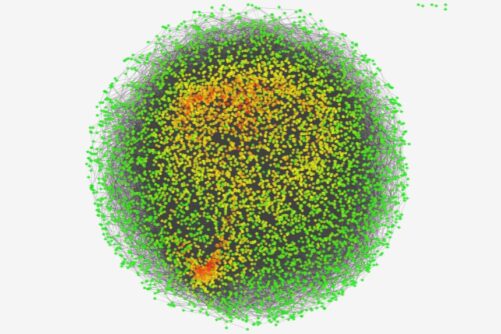
Gene Co-Expression Network, visualization by S. Mohammad H. Oloomi, licensed under CC BY-SA 3.0
Subscribe by email to follow the accumulating evidence and observations that shape our view of health, obesity, and policy.