The new year has brought a new natural experiment on the effects of restricting availability of “non-nutritious” foods. That’s a euphemism for junk foods.
Policymakers who are opposed to regulating the availability of junk food – “a threat to freedom” – have no reluctance about regulating the freedom of people who need food assistance. Thus, USDA has granted 18 states permission to restrict what can be purchased with SNAP benefits. So in those states people will not be allowed to purchase non-nutritious foods with a SNAP EBT card. As a practical matter, this means that candy and soda will be off limits for SNAP purchases.
Practical Issues
Unfortunately, this will introduce some practical issues. For instance, does that chocolate IQ Bar for Smart Mouths count as candy. Or is it a delicious source of nutritious plant protein? Likewise, is that sparkling water, with a hint of citrus, soda? Or is it just palatable water? Different states can split these hairs in different ways. And humans can rationalize ANYTHING.
So the practical aspect with of this messy policy change has real potential for chaos. Margaret Mannion is Director of Government Relations for the National Association of Convenience Stores. She explains:
“For our multi-state operators, it’s going to be a huge challenge to navigate 18 different compliance systems where soda or candy means something different in every one of those states.”
Thus it seems that some retailers may just decide to give up on participating in SNAP. Shelly Ver Ploeg is a senior fellow at the National Center for Food and Agricultural Policy and a former USDA economist. She describes the situation retailers face:
“These restrictions are coming at a time when states will be asked to bear a greater burden in the costs of administering the SNAP program overall.
“Retailers may decide it’s not worth the cost of participating, so they may leave the program.”
A Grand Experiment
So this may not be good for people who rely on the SNAP program. But it sets up an opportunity for research in the form of a natural experiment. For policy researchers who want to understand the true effects of capricious changes to vital programs, this is an uncommon opportunity. Even if folks whom these changes harm are not so enthusiastic.
Click here, here, and here for further perspective.
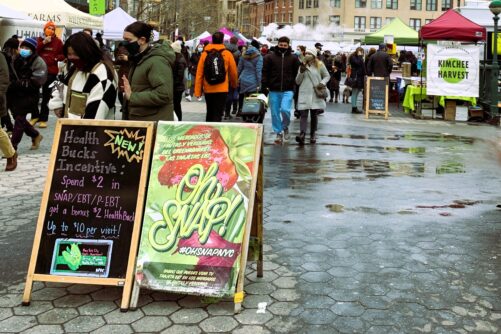
Oh Snap at the Union Square Farmers Market, photograph by Deansfa, licensed under CC BY-SA 4.0
Subscribe by email to follow the accumulating evidence and observations that shape our view of health, obesity, and policy.