Six years after the original EAT-Lancet report, the team behind this report is back with a sequel. Tamara Lucas and Richard Horton published a commentary to accompany the report. They note the critical feedback on the original edition. And they suggest those critiques may have had an ever so slightly humbling effect on the Commission:
“Although the 2019 EAT–Lancet Commission was successful and spurred progress, there was some misunderstanding of, and even opposition to, its recommendations. This critical feedback has been taken on board, acknowledging that healthy and nourishing food should justly be within the reach of all people. Thus, food justice is the beating heart of the new Commission.”
Yes, members of this commission seem to understand the mistake of ignoring the justice thing in their first stab at this. People need access to healthy food – not just wisdom from on high about what to eat. So the Commission put justice right up front in their report title.
But Is It Resonating?
The recommendations are clear enough. A sustainable, healthy diet for the planet needs to rely more on plants and less animal sources. Food systems need to adapt and put a healthy, sustainable diet within reach for more of the population.
But in describing his Planetary Health Diet, co-author Walter Willett sounds a bit defensive:
“This diet doesn’t eliminate meat and dairy, and it’s not a deprivation diet. It’s much like the Mediterranean diet and keeps dairy to once a day, red meat to once a week and eggs, poultry and fish to about twice a week.”
Given robust growth trends in meat and protein consumption, it is hard to make a compelling case that Willett’s messages are resonating. We certainly need more resilient, sustainable, and just food systems. But the undercurrent in this report is scolding. People are eating the wrong foods and industry is producing the wrong foods in the wrong way. “Don’t” is seldom a messaging strategy that works.
What we need is engagement – to promote higher aspirations for consumers and to find ways that industry can prosper in more sustainable food systems.
Click here for the new EAT-Lancet report and here for the commentary by Lucas and Horton. For further perspective, click here and here.
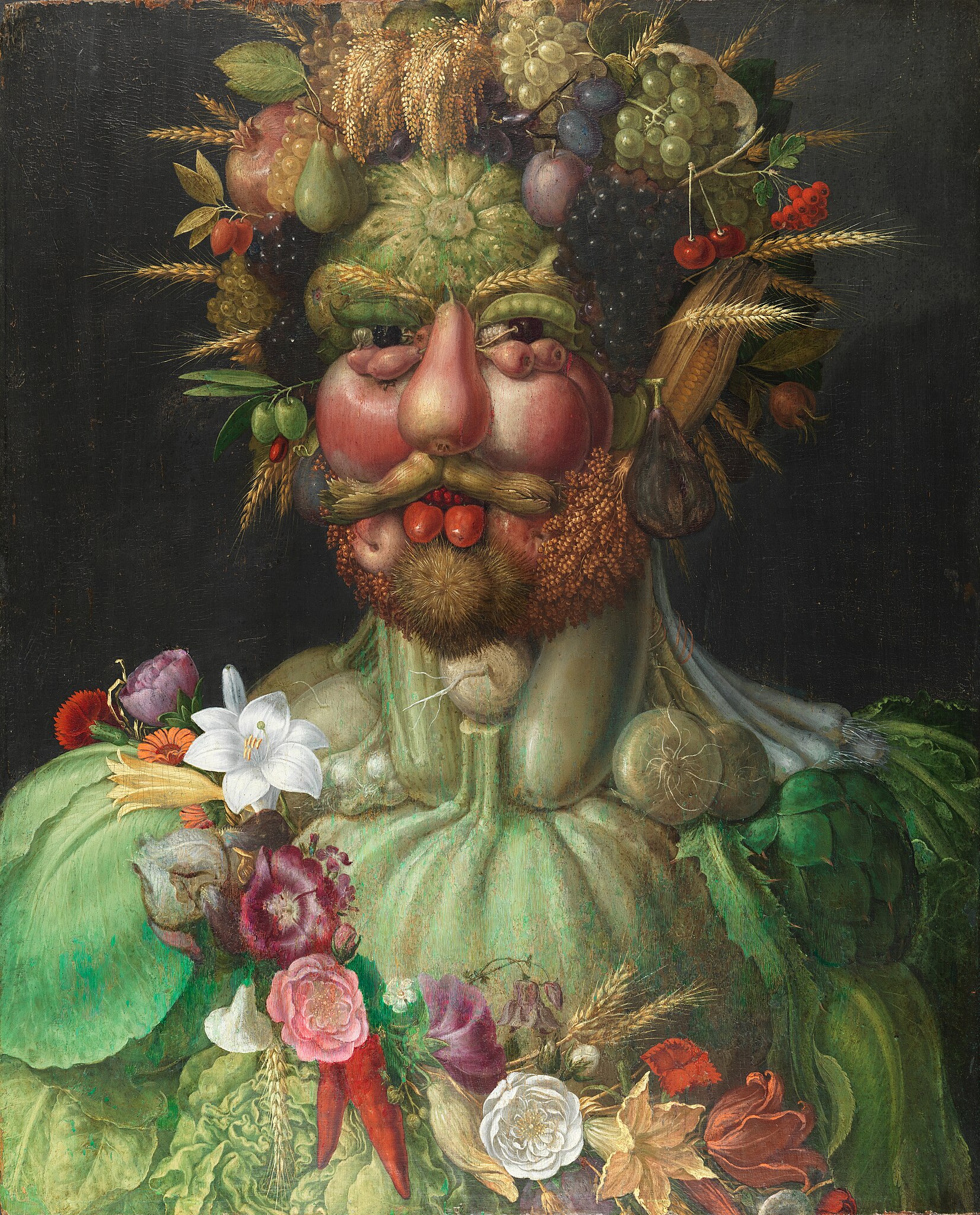
Vertumnus, painting by Giuseppe Arcimboldo / WikiArt
Subscribe by email to follow the accumulating evidence and observations that shape our view of health, obesity, and policy.